
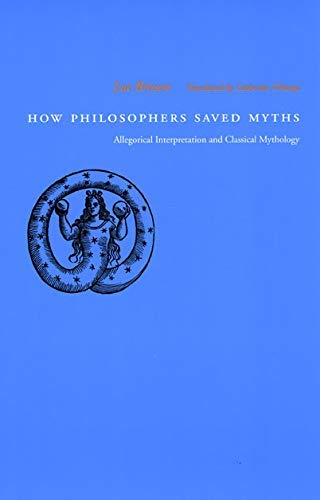
How Philosophers Saved Myths: Allegorical Interpretation and Classical Mythology
Product details
| Management number | 231928507 | Release Date | 2026/06/18 | List Price | US$9.83 | Model Number | 231928507 | ||
|---|---|---|---|---|---|---|---|---|---|
| Category | |||||||||
This study explains how the myths of Greece and Rome were transmitted from antiquity to the Renaissance. Luc Brisson argues that philosophy was ironically responsible for saving myth from historical annihilation. Although philosophy was initially critical of myth because it could not be declared true or false and because it was inferior to argumentation, mythology was progressively reincorporated into philosophy through allegorical exegesis. Brisson shows to what degree allegory was employed among philosophers and how it enabled myth to take on a number of different interpretive systems throughout the centuries: moral, physical, psychological, political, and even metaphysical.How Philosophers Saved Myths also describes how, during the first years of the modern era, allegory followed a more religious path, which was to assume a larger role in Neoplatonism. Ultimately, Brisson explains how this embrace of myth was carried forward by Byzantine thinkers and artists throughout the Middle Ages and Renaissance; after the triumph of Chistianity, Brisson argues, myths no longer had to agree with just history and philosophy but the dogmas of the Church as well. Read more
| ASIN | B001W6RFQS |
|---|---|
| XRay | Not Enabled |
| ISBN13 | 978-0226075389 |
| Language | English |
| File size | 2.2 MB |
| Page Flip | Not Enabled |
| Publisher | University of Chicago Press |
| Word Wise | Not Enabled |
| Print length | 221 pages |
| Accessibility | Learn more |
| Publication date | November 15, 2008 |
| Enhanced typesetting | Not Enabled |
Bestseller ranking
Ancient Greek & Roman




Customers who viewed this product also viewed
Mats





Correction of product information
If you notice any omissions or errors in the product information on this page, please use the correction request form below.
Correction Request Form